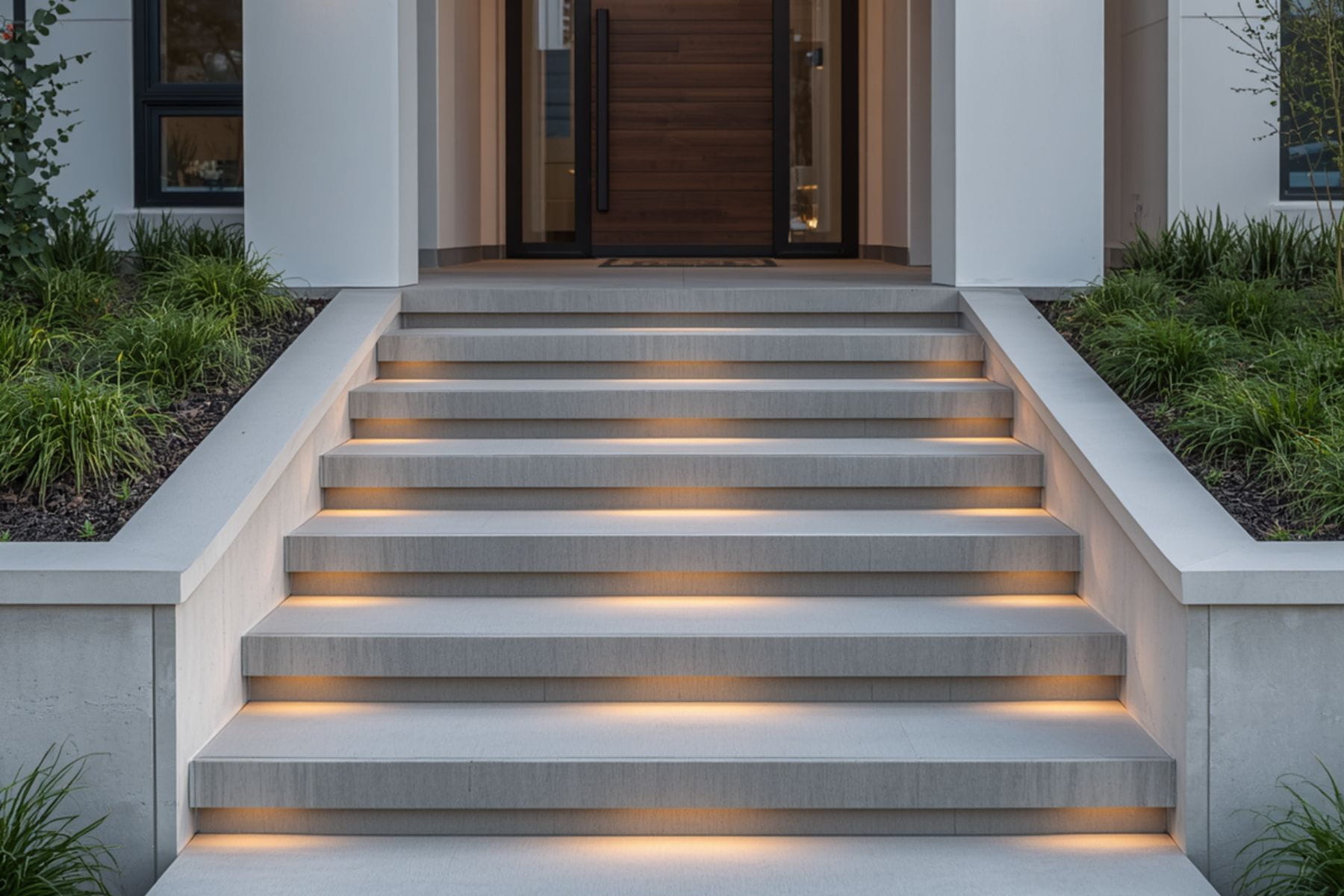
Staten Island Concrete Steps
Licensed masonry contractors serving Great Kills, Tottenville, Annadale, New Dorp, Eltingville, St. George, Stapleton, Huguenot, and all of Staten Island — no subcontractors, ever.
Concrete steps are both a functional necessity and a first impression. They carry every visitor to your front door and take the full punishment of Staten Island winters — freeze-thaw cycles, de-icing salts, and decades of foot traffic. Whether you need new steps installed, existing steps repaired, or a cracked front stoop replaced, Island Built Masonry delivers concrete work built to perform and built to last.
We are a fully licensed masonry contractor. Every worker on your project is an Island Built Masonry employee. No subcontractors. No job-site surprises. Just a skilled crew you can count on.
Get a Free Estimate — no pressure, no obligation.
Concrete Step Installation Services on Staten Island
A new set of concrete steps is a structural masonry project that requires proper planning, correct forming, and precise concrete placement. Done right, new steps will serve a Staten Island home for 30 to 50 years with minimal maintenance. Done wrong — inadequate subbase, improper drainage, wrong concrete mix — they crack, heave, and deteriorate within a decade.
Subbase and Drainage
Every new concrete step installation begins with proper subbase preparation. The ground beneath steps must be compacted and stable. We excavate to remove organic material and soft soil, install a compacted gravel base of appropriate depth, and ensure the foundation drains away from the structure. In Staten Island soil conditions — which vary from clay to fill material depending on neighborhood — this assessment is not a formality. We verify conditions before forming.
Forming and Reinforcement
Steps are formed to precise dimensions with steel forms or wood framing. Riser height, tread depth, and overall configuration are established to meet both NYC Building Code requirements and your specific site geometry. Rebar or wire mesh reinforcement is placed in the form before concrete is poured, providing the tensile strength that keeps steps intact through years of freeze-thaw cycling.
Concrete Mix Selection
For exterior steps in a northeastern climate, the concrete mix matters. We specify air-entrained concrete with appropriate water-to-cement ratio for Staten Island conditions. Air entrainment creates microscopic bubbles that give the concrete room to expand during freezing, dramatically reducing surface scaling and spalling. This is a standard specification for exterior flatwork in the NYC area that not every contractor consistently follows.
Finishing
After placement, concrete is struck off, floated, and finished with a broom or other texture appropriate for the application. A slightly textured surface provides traction in wet and icy conditions — critical for Staten Island winters. Steps are protected and allowed to cure before foot traffic is permitted.
Design Options
We form steps in a range of configurations: straight runs, curved returns, with or without cheek walls, with decorative edge profiles, or with bluestone or brick treads set in mortar for an upgraded appearance. If you have a specific design vision for your front entry, we work with you to execute it within the structural and code requirements of the project.
Concrete Step Repair and Overlay
Not every concrete step situation calls for full replacement. Many steps that look seriously deteriorated can be structurally sound beneath the surface damage. Island Built Masonry assesses your existing steps honestly and recommends repair when it is appropriate — and replacement when it is the right call.
Spalling and Surface Damage Repair
Freeze-thaw scaling — where the concrete surface flakes away in layers — is the most common form of step deterioration in Staten Island. If the structural concrete below the scaled surface is sound, we can resurface with a bonded concrete overlay or mortar topping that restores the appearance and weather resistance of the step.
Crack Repair
Cracks in concrete steps range from cosmetic surface crazing to structural through-cracks indicating movement or subbase failure. We assess crack origin before recommending treatment. Surface cracks are routed and filled with appropriate repair mortar or polyurethane sealant. Through-cracks from settlement may indicate the need for more extensive intervention.
Tread Rebuilding
Worn or broken tread edges are a trip hazard and a common concrete step repair request. We saw-cut along a defined joint and rebuild the tread edge with bonded repair mortar, restoring a clean, safe edge.
Full Step Replacement vs. Repair
We give you an honest assessment. If the existing steps have sound structural concrete and the damage is surface-deep, repair is cost-effective and appropriate. If the subbase has failed, the steps have shifted or settled significantly, or the damage is through the full depth of the step, replacement is the right answer. We explain exactly what we find and why we recommend what we do.
How Long Do Concrete Steps Last in NYC?
New York City has specific code requirements for exterior steps in residential construction, covering riser height, tread depth, handrail requirements, and landing dimensions. Island Built Masonry is familiar with the NYC Building Code requirements applicable to Staten Island residential projects.
Key requirements that affect most residential step projects:
Riser uniformity — No riser within a flight may vary by more than 3/8 inch from any other riser. Inconsistent risers are among the most common trip hazards and code violations on older step installations.
Tread depth and slip resistance — Minimum tread depths are specified by code, and surface finish must provide adequate slip resistance in wet conditions.
Handrail requirements — Any flight of four or more risers typically requires a handrail on at least one side. We design handrail anchor points into the concrete forming so post-installation additions are structurally secure.
Landing dimensions — Top and bottom landings must meet minimum dimension requirements. We account for these in the layout and forming process.
If your existing steps were built without a permit or do not meet current standards, we can bring them into compliance — or advise you on what is required.
Concrete Steps Contractors Serving All of Staten Island
Island Built Masonry installs and repairs concrete steps throughout Staten Island, including:
- Great Kills — High volume of mid-century homes with original concrete steps that have reached the end of their service life; replacement and repair both common
- Tottenville — Older housing stock with original stoops; we match period character in our step design and finishing
- Annadale — Suburban residential; new installation and repair work for homes built in the 1970s and 1980s now showing concrete deterioration
- New Dorp — Active residential service area; freeze-thaw damage to steps is a consistent post-winter demand driver
- Eltingville — We regularly work here on both new step installation and overlay repair projects
- St. George — Urban residential; older brownstone-era homes with front stoops requiring careful replacement
- Stapleton — Waterfront proximity; salt air and de-icing salt use accelerate surface scaling; we account for this in material specification
- Huguenot — Southern Staten Island residential; concrete step installation and repair services available throughout
We also serve Westerleigh, Bay Terrace, Dongan Hills, Bulls Head, Oakwood, Richmond Valley, Charleston, and all surrounding Staten Island communities.
Frequently Asked Questions — Concrete Steps
How long do concrete steps last in Staten Island? Properly installed concrete steps — correct subbase, air-entrained mix, good finishing, and appropriate curing — should last 30 to 50 years with normal maintenance. The primary cause of premature failure in Staten Island is the combination of freeze-thaw cycling and de-icing salt use. Air-entrained concrete specified for freeze-thaw conditions significantly extends step life. Steps installed with the wrong concrete mix or inadequate subbase preparation can begin deteriorating within five years.
Can I have bluestone treads or brick installed on concrete steps? Yes — and it is a popular upgrade on Staten Island front stoops. Bluestone is a natural Pennsylvania stone that weathers beautifully in northeastern climates, and it gives a front entry an elevated, traditional look. We form and pour the concrete structure and then set bluestone or brick treads in mortar over the concrete substrate. The additional detailing requires more time and cost but significantly improves the finished appearance.
When is it better to repair steps rather than replace them? Repair makes sense when the structural concrete is sound and the damage is limited to the surface — scaling, worn tread edges, or minor cracking. Replacement makes sense when: the subbase has failed and steps have shifted or settled; cracking extends through the full depth; the configuration does not meet current NYC code; or the steps are more than 40 years old with widespread deterioration. We inspect and give you an honest recommendation rather than always defaulting to replacement.
Do new concrete steps require a permit in Staten Island? It depends on the scope of the project. Minor repair work typically does not require a permit. New step installation or significant reconstruction may require a NYC DOB permit depending on the scope, height of the stoop, and connection to a building entry. We advise you on permit requirements during the estimate process and can assist with the permit application when required.
How do I prevent de-icing salt from damaging my concrete steps? Use calcium chloride or magnesium chloride rather than sodium chloride (rock salt) when ice removal is needed — they are less aggressive on concrete. Better yet, use sand for traction rather than salt where possible. Sealing your concrete steps every two to three years with a penetrating concrete sealer adds meaningful protection against salt and moisture intrusion. We can apply sealer as a close-out step on any new installation or repair.
Get a Free Concrete Steps Estimate
Whether you need new steps installed, existing steps repaired, or a deteriorated front stoop replaced, Island Built Masonry delivers licensed concrete work built for Staten Island conditions. Our no-subcontractor crew means consistent quality and real accountability on every job.
Call us or fill out our contact form to schedule a free estimate. We inspect your site, explain the options, and give you a clear written quote.
Island Built Masonry — Staten Island concrete steps installed and repaired right, by a crew that shows up and stands behind their work.